Unlocking the Potential of Circular Economy Through Agentic Automation and Data Analytics

The circular economy is no longer a futuristic concept but a pressing necessity in today’s business landscape. As organizations strive to minimize waste, optimize resources, and reduce their environmental footprint, the integration of agentic automation and data analytics is emerging as a game-changer. These technologies are not just enhancing operational efficiency but are also redefining how businesses approach sustainability, corporate governance, and long-term resilience.
The Foundation of Circular Economy in Modern Business
The circular economy is built on three core principles: designing out waste and pollution, keeping products and materials in use, and regenerating natural systems. Unlike the traditional linear economy, which follows a ‘take-make-dispose’ model, the circular economy emphasizes sustainability at every stage of the product lifecycle. However, transitioning to this model requires more than just good intentions—it demands innovative tools and strategies that can turn theory into practice.
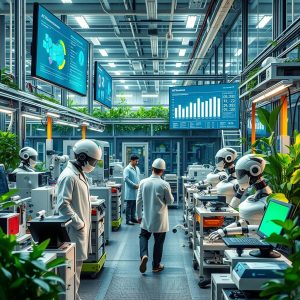
Agentic automation, a subset of artificial intelligence, plays a pivotal role in this transition. By leveraging autonomous agents that can make decisions, learn from data, and adapt to changing conditions, businesses can streamline processes such as supply chain management, waste reduction, and resource allocation. These agents operate in real-time, ensuring that every decision aligns with both economic and environmental goals. For instance, in manufacturing, agentic automation can optimize material usage, reducing excess waste while maintaining product quality.
The Role of Data Analytics in Driving Circular Practices
Data analytics is the backbone of the circular economy, providing the insights needed to make informed decisions. By analyzing vast amounts of data from supply chains, production processes, and consumer behavior, businesses can identify inefficiencies, predict trends, and implement sustainable practices. Predictive analytics, in particular, allows companies to forecast demand, manage inventory more effectively, and reduce overproduction—a major contributor to waste.
For example, retail companies can use data analytics to track the lifecycle of products, from production to disposal. By understanding how products are used and discarded, businesses can design more durable goods, implement take-back programs, and even create new revenue streams through recycling and refurbishment. This not only reduces environmental impact but also enhances customer loyalty by aligning with their values.
Agentic Automation: The Engine of Sustainable Transformation
Agentic automation goes beyond traditional automation by incorporating machine learning and adaptive decision-making. In the context of the circular economy, these agents can manage complex systems such as reverse logistics, where products are returned, refurbished, or recycled. By automating these processes, businesses can reduce costs, improve efficiency, and ensure compliance with sustainability regulations.
One of the most compelling applications of agentic automation is in waste management. Autonomous agents can sort recyclable materials with greater accuracy than human workers, reducing contamination and increasing the value of recycled materials. Additionally, these agents can optimize routes for waste collection, lowering fuel consumption and emissions. In cities where waste management is a significant challenge, agentic automation can transform how resources are recovered and reused.
Corporate Governance and the Circular Economy
Adopting circular economy principles requires a shift in corporate governance. Leaders must prioritize sustainability as a core business strategy rather than an afterthought. This involves setting clear goals, measuring progress, and holding teams accountable for environmental performance. Data analytics provides the transparency needed to track these efforts, while agentic automation ensures that sustainability initiatives are executed efficiently.
Fractional leadership, where experienced executives are brought in on a part-time or project basis, can also play a crucial role in driving this transformation. These leaders bring specialized knowledge in sustainability, digital transformation, and risk management, helping organizations navigate the complexities of the circular economy without the overhead of full-time hires. Their expertise can accelerate the adoption of new technologies and ensure that sustainability initiatives are aligned with broader business objectives.
The Future of Workforce Literacy in a Circular Economy
As businesses embrace the circular economy, workforce literacy becomes increasingly important. Employees must understand the principles of sustainability and how their roles contribute to broader environmental goals. Upskilling initiatives, powered by data analytics and agentic automation, can help bridge the knowledge gap by providing personalized learning experiences. For example, workers in manufacturing can receive training on how to operate new automated systems that reduce waste, while those in logistics can learn about sustainable supply chain practices.
Moreover, remote workforces can leverage digital tools to collaborate on sustainability projects, regardless of their location. Cloud-based platforms and collaborative cybersecurity measures ensure that sensitive data is protected while enabling teams to share insights and best practices. This not only fosters a culture of sustainability but also enhances workforce agility and resilience.
Blended Capital and Green Investing: Fueling the Transition
The transition to a circular economy requires significant investment, and blended capital—combining public, private, and philanthropic funds—can provide the necessary financial support. Green investing, which focuses on companies and projects that prioritize sustainability, is gaining traction as investors seek both financial returns and positive environmental impact. Predictive analytics can help identify high-potential opportunities in green investing, ensuring that capital is allocated to initiatives with the greatest impact.
For businesses, accessing blended capital can accelerate the adoption of agentic automation and data analytics, enabling them to scale their circular economy initiatives. Whether it’s through grants, impact investing, or sustainability-linked loans, financial innovation is making it easier for organizations to align their operations with environmental goals.
The circular economy is not just an environmental imperative but a strategic opportunity for businesses to innovate, reduce costs, and build resilience. By harnessing the power of agentic automation and data analytics, organizations can transform their operations, enhance corporate governance, and create a sustainable future. The journey is complex, but with the right tools and mindset, it is one that promises long-term rewards for both businesses and the planet. As technology continues to evolve, the possibilities for the circular economy will only expand, offering new ways to harmonize economic growth with environmental stewardship.