Beyond the Hype: How AI-Powered Predictive Analytics is Redefining Smart Logistics and Supply Chain Automation
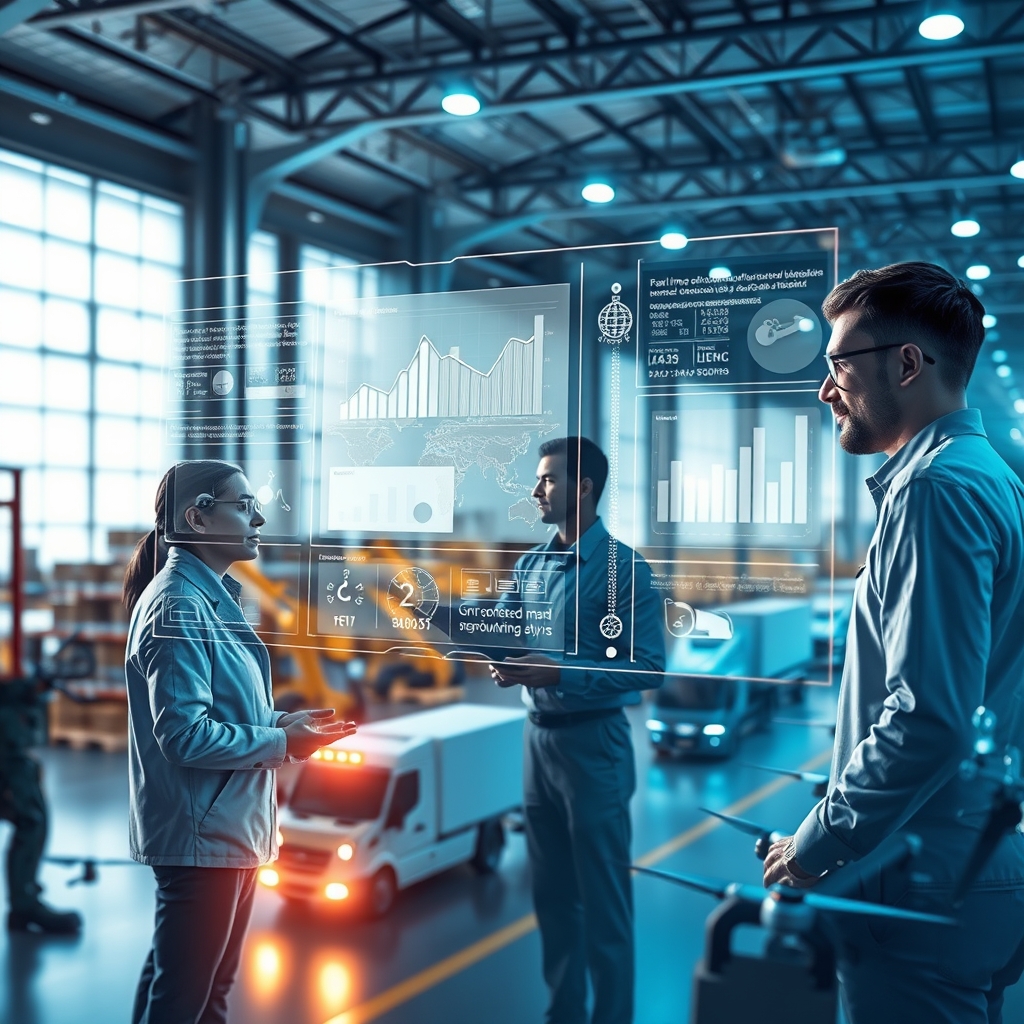
In an era where efficiency and precision dictate market leadership, businesses are increasingly turning to artificial intelligence to transform their logistics and supply chain operations. The integration of AI-powered predictive analytics is not just an upgrade—it’s a complete reimagining of how goods move, how inventory is managed, and how customer expectations are met. For companies navigating the complexities of global supply chains, this technology is becoming the cornerstone of competitive advantage, enabling them to anticipate disruptions, optimize routes, and deliver unparalleled service.
The Evolution of Smart Logistics
Smart logistics is no longer a futuristic concept; it’s a present-day necessity. Traditional logistics models relied on historical data and reactive strategies, often leaving businesses scrambling to address delays, inefficiencies, or unexpected demand spikes. AI-driven predictive analytics flips this script by leveraging real-time data, machine learning, and advanced algorithms to forecast trends, identify patterns, and make proactive decisions. Whether it’s predicting weather-related delays, optimizing warehouse layouts, or dynamically rerouting shipments, AI empowers logistics teams to act with foresight rather than hindsight.
For example, companies like Amazon and DHL have already integrated AI into their logistics operations to reduce delivery times and improve accuracy. By analyzing vast datasets—including traffic patterns, fuel costs, and even social media trends—these systems can predict the most efficient routes, adjust inventory levels in real time, and minimize waste. The result? Faster deliveries, lower costs, and happier customers.
Supply Chain Automation: The AI Advantage
Supply chain automation has long been a goal for businesses seeking to reduce manual labor and human error. However, the true potential of automation is unlocked when paired with AI. Predictive analytics enables supply chains to become self-optimizing, adapting to changes in demand, supplier performance, or geopolitical factors without constant human intervention. This level of automation doesn’t just streamline operations—it future-proofs them.
One of the most impactful applications of AI in supply chain automation is demand forecasting. Traditional methods often rely on static models that fail to account for sudden market shifts. AI, on the other hand, continuously learns from new data, refining its predictions to reflect real-world conditions. Retailers like Walmart and Target use AI-driven demand forecasting to ensure shelves are stocked with the right products at the right time, reducing overstock and stockouts while improving customer satisfaction.
Another critical area is risk management. Supply chains are vulnerable to a myriad of disruptions, from natural disasters to supplier bankruptcies. AI-powered predictive analytics can assess risks by analyzing global news, economic indicators, and historical data, allowing businesses to mitigate potential issues before they escalate. For instance, if a hurricane is forecasted to hit a key manufacturing hub, AI can suggest alternative suppliers or reroute shipments to avoid delays.
From Reactive to Proactive: The Role of Business Intelligence
Business intelligence (BI) has traditionally been about reporting—providing insights into what has already happened. But with AI, BI evolves into a proactive tool that not only reports but also predicts and prescribes actions. This shift is particularly transformative for supply chain and logistics teams, who can now move from firefighting to strategic planning.
AI-enhanced BI platforms integrate data from multiple sources—ERP systems, IoT sensors, customer feedback, and market trends—to create a holistic view of the supply chain. These platforms can identify inefficiencies, such as bottlenecks in production or excessive transportation costs, and recommend optimizations. For example, AI might suggest consolidating shipments to reduce fuel consumption or adjusting production schedules to align with predicted demand. The ability to act on these insights in real time is what sets AI-powered BI apart from traditional analytics.
Customer Experience: The Hidden Benefit of AI in Logistics
While the operational benefits of AI in logistics are clear, its impact on customer experience is equally profound. Today’s consumers expect transparency, speed, and personalization—demands that are nearly impossible to meet without AI-driven automation. Predictive analytics enables businesses to provide accurate delivery estimates, proactively communicate delays, and even personalize delivery options based on customer preferences.
For instance, e-commerce giants like Shopify and Alibaba use AI to offer dynamic delivery windows, allowing customers to choose the most convenient time for their orders. AI also powers real-time tracking, giving customers visibility into their shipments’ progress and reducing anxiety about lost or delayed packages. By enhancing the customer experience, businesses can boost loyalty, increase repeat purchases, and ultimately drive revenue growth.
The Future: AI as the Backbone of Strategic Partnerships
As AI continues to reshape logistics and supply chain automation, it’s also redefining how businesses collaborate. Strategic partnerships are no longer just about shared resources or complementary services—they’re about leveraging AI to create synergies that drive mutual growth. For example, a logistics provider might partner with a technology company to integrate AI-driven route optimization into their platform, offering clients faster and more cost-effective shipping solutions.
These partnerships extend beyond logistics. Manufacturers, retailers, and technology providers are increasingly collaborating to create end-to-end AI-powered supply chains. By sharing data and insights, partners can optimize every stage of the supply chain, from procurement to last-mile delivery. This level of integration not only improves efficiency but also fosters innovation, as partners co-develop new solutions to address emerging challenges.
AI-powered predictive analytics is not just a tool for optimizing logistics and supply chains—it’s a catalyst for transformation. By enabling businesses to anticipate disruptions, automate processes, and enhance customer experiences, AI is redefining what’s possible in an industry that thrives on precision and speed. The companies that embrace this technology today will be the ones leading the charge into a future where supply chains are not just efficient, but intelligent, adaptive, and resilient. As the lines between technology and logistics continue to blur, one thing is clear: the future of supply chain automation is not just smart—it’s predictive.