
How AI and Green Manufacturing Are Reshaping the Future of Consumer Electronics
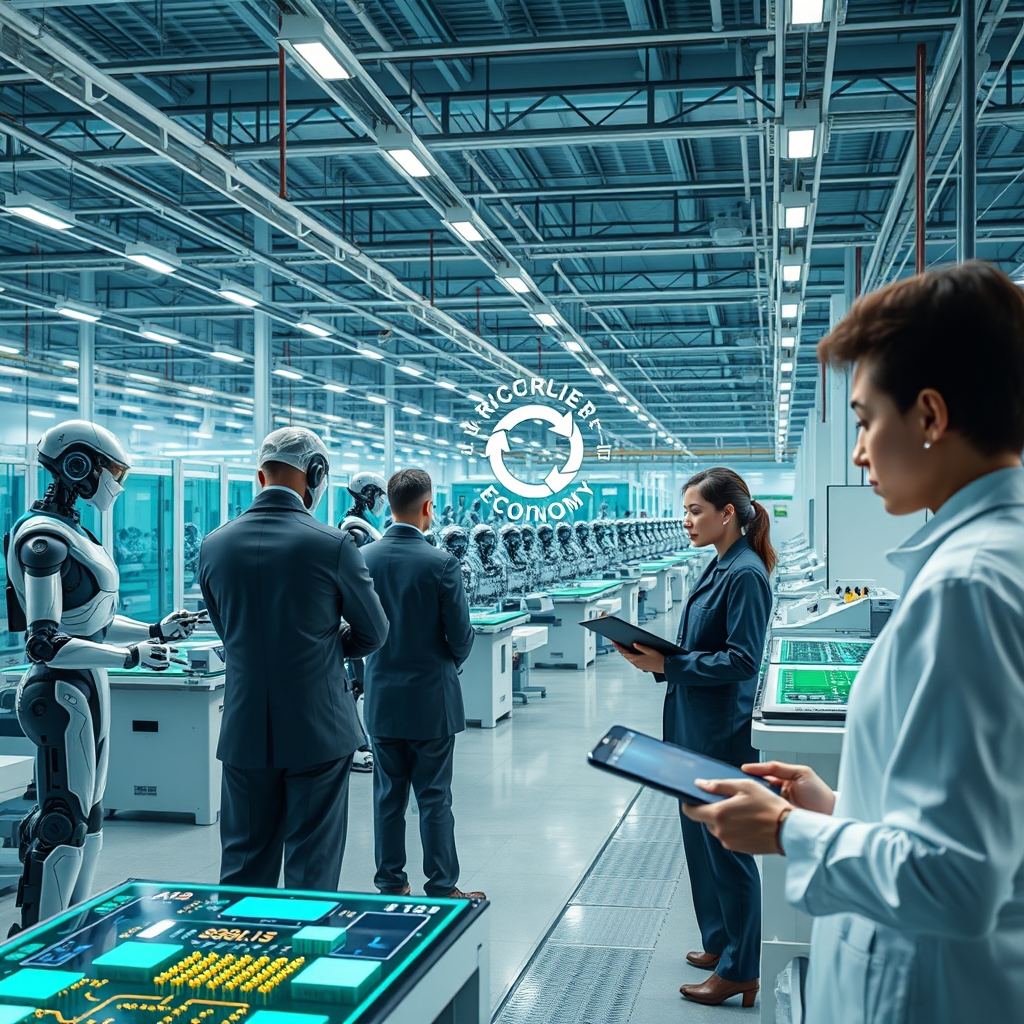
The consumer electronics industry is undergoing a seismic shift, driven by two powerful forces: artificial intelligence integration and the urgent need for sustainable practices. As global demand for smarter, more efficient devices grows, manufacturers are rethinking every aspect of production—from supply chain optimization to electronic waste management. The convergence of these trends is not just a response to market pressures but a fundamental reimagining of how technology is designed, built, and consumed.
The AI Revolution in Hardware Development
Artificial intelligence is no longer confined to software. Today, it’s embedded in the very hardware that powers our devices, enabling unprecedented levels of efficiency and customization. Custom silicon chips, for instance, are being designed with AI-driven architectures to handle complex tasks like real-time data processing and machine learning at the edge. Companies like Apple, Qualcomm, and NVIDIA are leading the charge, developing chips that are not only faster but also more energy-efficient, reducing the carbon footprint of devices without compromising performance.
Generative AI hardware is another frontier, where AI models are used to optimize the design of components before they’re even manufactured. This approach accelerates innovation, allowing engineers to simulate and refine hardware configurations in virtual environments. The result? Fewer physical prototypes, reduced material waste, and faster time-to-market for cutting-edge products like foldable display technology and advanced satellite communication devices.
Smart Factories and the Automation Wave
The rise of smart factory automation is transforming traditional manufacturing floors into highly efficient, data-driven ecosystems. AI-powered robots and IoT-enabled sensors work in tandem to monitor production lines in real-time, predicting maintenance needs before breakdowns occur and adjusting workflows to minimize downtime. This level of automation doesn’t just boost productivity—it also enhances precision, reducing defects and the need for rework, which in turn lowers resource consumption.
Near Field Communication (NFC) and other wireless technologies are further streamlining operations, enabling seamless communication between machines and systems. In a smart factory, every component, from raw materials to finished products, can be tracked and optimized, creating a closed-loop system that aligns with the principles of the circular economy. This shift is particularly critical in the consumer electronics sector, where rapid innovation often leads to short product lifecycles and significant waste.
Sustainability as a Core Strategy
The push for sustainability is no longer a niche concern—it’s a business imperative. Green manufacturing practices are being adopted across the industry, from the use of recycled materials in device casings to the implementation of energy-efficient production processes. Companies are also exploring innovative ways to extend the lifespan of products, such as the refurbished smartphone market, which is gaining traction as consumers become more conscious of their environmental impact.
Sustainable packaging is another area of focus, with brands replacing plastic and non-recyclable materials with biodegradable or reusable alternatives. Some manufacturers are even experimenting with modular designs, allowing consumers to upgrade individual components rather than replacing entire devices. This approach not only reduces electronic waste but also aligns with the growing demand for premiumization—consumers are increasingly willing to pay a premium for products that are both high-quality and sustainable.
Rethinking the Global Value Chain
The traditional linear model of the global value chain—where raw materials are extracted, transformed into products, and eventually discarded—is being replaced by a more circular approach. Strategic sourcing and component sourcing are now guided by principles of sustainability, with companies prioritizing suppliers that adhere to ethical and environmental standards. This shift is not without its challenges, particularly in regions where regulatory frameworks are still evolving, but the long-term benefits are undeniable.
Hardware as a Service (HaaS) is emerging as a game-changer in this context. Instead of selling devices outright, companies are offering them as part of a subscription model, where ownership remains with the manufacturer. This incentivizes companies to design products that are durable, repairable, and upgradable, as they retain responsibility for the entire lifecycle of the device. It also creates new revenue streams while reducing the environmental impact of disposable electronics.
The Role of AI in Supply Chain Optimization
Supply chain optimization has always been a critical factor in the success of consumer electronics companies, but AI is taking it to the next level. Predictive analytics and machine learning algorithms are being used to forecast demand with unprecedented accuracy, reducing overproduction and excess inventory. This not only cuts costs but also minimizes waste, as products are manufactured in quantities that closely match consumer demand.
AI is also enhancing logistics, from route optimization for deliveries to automated warehouses that use robotics to sort and ship products. These advancements are particularly valuable in the context of the refurbished smartphone market, where the ability to quickly and efficiently process returned devices is key to maintaining profitability. By leveraging AI, companies can ensure that refurbished products are restored to like-new condition and resold as quickly as possible, further reducing the environmental impact of electronic waste.
As the consumer electronics industry continues to evolve, the integration of AI and sustainable practices will be the defining factors in its future. Companies that embrace these trends will not only stay ahead of the competition but also contribute to a more circular and responsible economy. The shift is already underway, and those who adapt will shape the next generation of technology—one that is smarter, greener, and more efficient than ever before.



