The Strategic Fusion of Circular Economy and Workforce Literacy: Driving Sustainable Finance Through Agentic Automation

The intersection of sustainability and technology is no longer a niche conversation but a core strategic imperative for businesses worldwide. As organizations grapple with the dual challenges of environmental responsibility and digital transformation, two concepts have emerged as pivotal: the circular economy and workforce literacy. When combined with agentic automation, these elements create a powerful framework for sustainable finance, redefining how companies operate, innovate, and grow.
The Circular Economy: A Paradigm Shift in Resource Management
The circular economy represents a fundamental departure from the traditional linear model of “take, make, dispose.” Instead, it emphasizes the continuous use of resources through recycling, repurposing, and regeneration. This approach not only minimizes waste but also unlocks new economic opportunities by transforming by-products and end-of-life materials into valuable inputs for other processes. For businesses, adopting circular economy principles is no longer just an ethical choice—it’s a competitive advantage.
Companies that integrate circular practices into their operations often discover cost savings, enhanced brand reputation, and access to new markets. For example, fashion brands that embrace upcycling or tech companies that design modular, repairable products are not only reducing their environmental footprint but also appealing to a growing segment of eco-conscious consumers. However, the transition to a circular economy is not without its challenges. It requires a deep understanding of supply chains, material science, and consumer behavior—areas where data analytics and agentic automation can play a transformative role.
Agentic Automation: The Engine of Circular Innovation
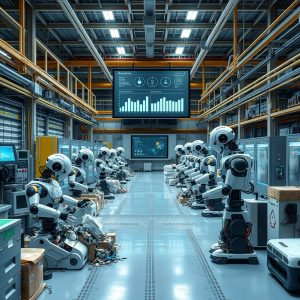
Agentic automation, a subset of artificial intelligence, refers to systems that can autonomously perform tasks, make decisions, and adapt to changing conditions without constant human intervention. In the context of the circular economy, agentic automation can optimize resource flows, predict demand for recycled materials, and even identify new opportunities for waste reduction. For instance, AI-driven platforms can analyze vast datasets to determine the most efficient ways to disassemble and repurpose electronic waste, turning what was once a liability into a revenue stream.
Beyond operational efficiencies, agentic automation also enables businesses to scale circular practices. Startups and established enterprises alike can leverage AI to monitor and manage their sustainability metrics in real time, ensuring compliance with regulations while also meeting the expectations of investors and customers. This level of automation is particularly valuable in industries with complex supply chains, such as manufacturing and retail, where manual tracking of materials and waste can be cumbersome and error-prone.
Workforce Literacy: Bridging the Skills Gap for a Sustainable Future
While technology is a critical enabler of the circular economy, its success ultimately hinges on the people who implement and sustain these practices. Workforce literacy—particularly in areas like sustainability, data analytics, and digital tools—is essential for driving meaningful change. Employees must not only understand the principles of the circular economy but also possess the skills to leverage technology effectively. This is where upskilling and reskilling initiatives become indispensable.
Companies that invest in workforce literacy are better positioned to navigate the complexities of the circular economy. For example, training programs that focus on data analytics can empower employees to interpret sustainability metrics, identify inefficiencies, and propose data-driven solutions. Similarly, workshops on digital tools can help teams collaborate more effectively, whether they’re designing new products or optimizing supply chains. The goal is to create a workforce that is not only literate in sustainability but also capable of innovating within this new paradigm.
The Role of Sustainable Finance in Accelerating Change
Sustainable finance is the glue that binds the circular economy and workforce literacy together. By directing capital toward environmentally and socially responsible initiatives, sustainable finance provides the financial backbone for circular business models. Green bonds, impact investing, and sustainability-linked loans are just a few of the instruments that enable companies to fund their transition to circularity. However, the effectiveness of these financial tools depends on robust data and transparency—areas where agentic automation can make a significant impact.
For instance, AI-driven platforms can assess the environmental and social impact of investments in real time, providing investors with the insights they need to make informed decisions. This level of transparency is crucial for attracting capital to circular economy projects, which often require upfront investment but deliver long-term benefits. Moreover, sustainable finance can incentivize workforce literacy by funding training programs and innovation hubs that equip employees with the skills needed to thrive in a circular economy.
Collaborative Ecosystems: The Key to Scaling Impact
No single organization can drive the circular economy alone. Success requires collaboration across industries, sectors, and even geographies. Businesses, governments, non-profits, and academic institutions must work together to create ecosystems that support circular innovation. These ecosystems can take many forms, from industry consortia that share best practices to public-private partnerships that fund large-scale recycling infrastructure.
Agentic automation can facilitate this collaboration by breaking down silos and enabling seamless data sharing. For example, AI-powered platforms can connect manufacturers with recyclers, ensuring that materials are efficiently recovered and reused. Similarly, digital marketplaces can match suppliers of recycled materials with buyers, creating a vibrant secondary market for circular resources. By fostering these connections, agentic automation not only accelerates the transition to a circular economy but also strengthens the resilience of supply chains.
As businesses continue to navigate the complexities of sustainability and digital transformation, the fusion of circular economy principles, workforce literacy, and agentic automation offers a compelling path forward. This approach is not just about reducing waste or improving efficiency—it’s about reimagining how value is created and sustained in the modern economy. Companies that embrace this shift will not only future-proof their operations but also position themselves as leaders in a world where sustainability and innovation go hand in hand. The journey is challenging, but the rewards—economic, environmental, and social—are well worth the effort.