How AI and Circular Economy Are Redefining the Future of Consumer Electronics

The consumer electronics industry stands at a crossroads, where innovation and sustainability are no longer mutually exclusive but intertwined forces shaping its future. As global demand for smarter, faster, and more efficient devices grows, so does the urgency to address the environmental and logistical challenges that accompany this expansion. The convergence of Artificial Intelligence Integration and the Circular Economy is emerging as a powerful solution, offering a pathway to reduce waste, optimize resources, and create a more resilient Global Value Chain.
The Role of AI in Supply Chain Optimization
Artificial Intelligence is revolutionizing how companies manage their supply chains, from Component Sourcing to Consumer Electronics Logistics. By leveraging machine learning algorithms, businesses can predict demand with unprecedented accuracy, reducing overproduction and minimizing excess inventory. AI-driven tools analyze vast datasets in real time, identifying patterns in consumer behavior, market trends, and even geopolitical risks that could disrupt the flow of goods. This level of Supply Chain Optimization not only enhances efficiency but also reduces the carbon footprint of manufacturing and distribution.
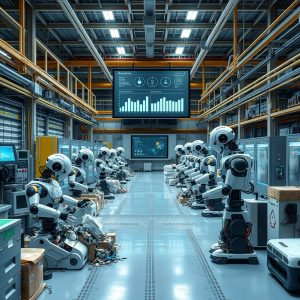
For instance, AI-powered Smart Factory Automation enables manufacturers to dynamically adjust production lines based on real-time demand signals. This agility ensures that resources are allocated precisely where they are needed, cutting down on energy consumption and waste. Additionally, AI facilitates Strategic Sourcing by evaluating suppliers not just on cost, but on sustainability metrics such as carbon emissions, ethical labor practices, and material recyclability. The result is a more transparent and responsible supply chain that aligns with the principles of the circular economy.
Circular Economy: A Paradigm Shift in Electronics
The traditional linear model of “take, make, dispose” is increasingly unsustainable in the consumer electronics sector. The Circular Economy offers an alternative by designing products and systems that prioritize longevity, reuse, and recycling. This approach is gaining traction as companies recognize the economic and environmental benefits of keeping materials in use for as long as possible. One of the most visible manifestations of this shift is the booming Refurbished Smartphone Market, where devices are restored to like-new condition and resold, extending their lifecycle and reducing electronic waste.
Beyond refurbishment, the circular economy encourages innovation in product design. Foldable Display Technology, for example, is not just a novelty but a step toward more durable and adaptable devices. By creating products that can evolve with consumer needs—such as smartphones that transform into tablets—manufacturers can reduce the frequency of upgrades and the associated waste. Similarly, Sustainable Packaging solutions, such as biodegradable materials or reusable containers, are becoming standard as companies seek to minimize their environmental impact.
Electronic Waste Management: Turning Challenges into Opportunities
Electronic waste, or e-waste, is one of the fastest-growing waste streams globally, with millions of tons of discarded devices ending up in landfills each year. However, AI and circular economy principles are transforming e-waste from a problem into an opportunity. Advanced sorting technologies powered by AI can identify and separate valuable materials from e-waste, such as rare earth metals, gold, and copper, with remarkable precision. These materials can then be reintegrated into the manufacturing process, reducing the need for virgin resources and lowering production costs.
Companies are also exploring Hardware As A Service (HaaS) models, where consumers lease devices instead of owning them outright. This approach incentivizes manufacturers to design products that are easier to repair, upgrade, and recycle, as they retain ownership throughout the product’s lifecycle. HaaS not only reduces e-waste but also makes premium technology more accessible to consumers who might otherwise be priced out of the market.
The Rise of Custom Silicon Chips and Generative AI Hardware
As AI becomes more embedded in consumer electronics, the demand for specialized hardware is surging. Custom Silicon Chips, designed specifically for AI workloads, are enabling devices to process data more efficiently and with lower power consumption. These chips are a game-changer for applications like Generative AI Hardware, which relies on massive computational power to create content, from images to text, in real time. By optimizing hardware for AI tasks, manufacturers can deliver faster, more energy-efficient devices that meet the growing expectations of consumers.
The integration of AI into hardware is also driving innovation in Device Automation. Smart home devices, for example, can now learn user preferences and adjust settings automatically, reducing energy consumption and enhancing convenience. Similarly, AI-powered Near Field Communication (NFC) tags are enabling seamless interactions between devices, from contactless payments to automated inventory tracking in retail environments. These advancements are not only improving user experiences but also contributing to more sustainable consumption patterns.
Green Manufacturing: A Commitment to Sustainability
Sustainability is no longer a buzzword but a core business strategy for consumer electronics companies. Green Manufacturing practices, such as using renewable energy sources, reducing water consumption, and eliminating hazardous materials, are becoming standard across the industry. AI plays a crucial role here as well, by optimizing energy use in factories, predicting maintenance needs to prevent wasteful downtime, and even designing products with fewer components to simplify recycling.
One of the most exciting developments in green manufacturing is the use of Satellite Communication to monitor and manage remote production facilities. By leveraging real-time data from satellites, companies can track environmental metrics such as air quality, water usage, and deforestation risks, ensuring that their operations align with sustainability goals. This level of oversight is particularly valuable in regions where regulatory enforcement may be lacking, allowing companies to proactively address potential issues before they escalate.
The consumer electronics industry is undergoing a profound transformation, driven by the dual imperatives of innovation and sustainability. The integration of AI into supply chains, manufacturing, and product design is enabling companies to operate more efficiently and responsibly, while the principles of the circular economy are redefining how products are made, used, and disposed of. As these trends continue to evolve, they will not only shape the future of the industry but also set a new standard for how technology can coexist with the planet. The choices made today will determine whether the next generation of devices leaves a legacy of progress or a trail of waste, and the time to act is now.