The Hidden Engine of the Circular Economy: How AI and Custom Silicon Chips Are Revolutionizing Refurbished Smartphone Logistics
The refurbished smartphone market is no longer the shadowy underbelly of consumer electronics—it’s becoming a high-tech powerhouse, driven by the same forces that are reshaping the industry at large: artificial intelligence and custom silicon chips. What was once a fragmented, often opaque sector is now a testbed for innovation, where supply chain optimization, device automation, and circular economy principles converge to create a more sustainable and profitable future. The question is no longer whether refurbished devices can compete with new ones, but how quickly the industry can scale these advancements to meet growing demand.
The Logistics Challenge: From Chaos to Clarity
Refurbished smartphones face a unique set of logistical hurdles. Unlike new devices, which move in predictable, bulk shipments from factory to retailer, refurbished units arrive from a patchwork of sources—trade-ins, returns, lease programs, and even electronic waste streams. Each device has a different history, condition, and potential for resale, making inventory management a nightmare. Traditional logistics systems, designed for uniformity, struggle to adapt to this variability. Enter AI-driven supply chain optimization.
Machine learning algorithms are now being deployed to predict demand, optimize routing, and even assess the condition of incoming devices in real time. Companies like Apple and Samsung, which have long dominated the premiumization strategy of new devices, are quietly applying the same level of sophistication to their refurbished programs. AI models analyze everything from battery health to screen scratches, categorizing devices into tiers that determine their resale value and optimal refurbishment path. This isn’t just about efficiency—it’s about unlocking hidden value in a market that was once dismissed as second-rate.
Custom Silicon: The Unsung Hero of Refurbishment
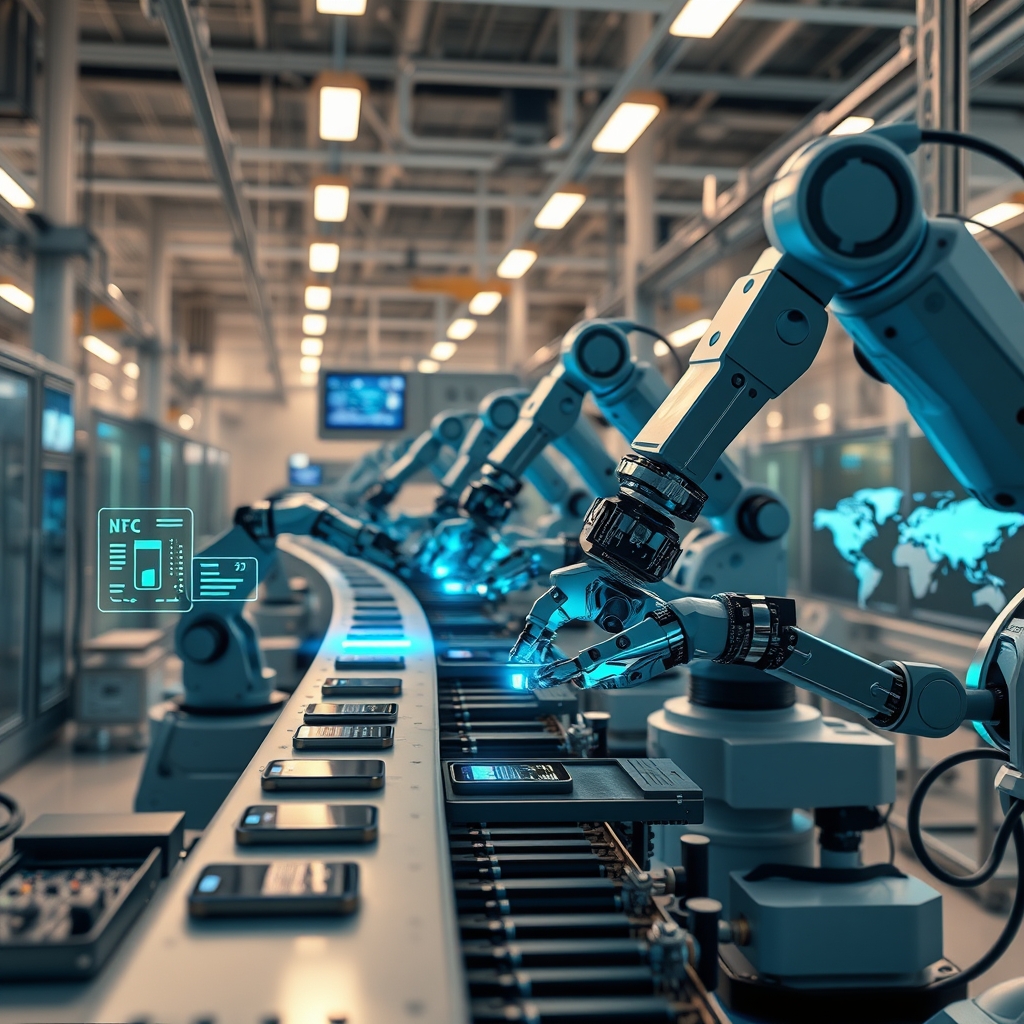
While AI handles the software side of logistics, custom silicon chips are revolutionizing the hardware. These specialized processors, designed specifically for refurbishment tasks, are enabling faster diagnostics, more precise repairs, and even automated disassembly. For example, a chip embedded in a refurbishment line might use near field communication (NFC) to instantly identify a device’s model, history, and required repairs, then trigger robotic arms to perform tasks like screen replacement or battery swapping with surgical precision.
This level of automation wasn’t possible with off-the-shelf hardware. Custom silicon allows for real-time data processing at the edge, reducing latency and improving accuracy. It also enables smart factory automation, where entire refurbishment lines operate with minimal human intervention. The result? Faster turnaround times, lower costs, and a higher-quality product—all critical factors in making refurbished smartphones a viable alternative to new ones.
Sustainability as a Competitive Advantage
The refurbished smartphone market has always had a green narrative, but until recently, that story was more about necessity than innovation. Now, sustainability is becoming a core part of the value proposition, thanks to advancements in green manufacturing and electronic waste management. AI is playing a pivotal role here, too, by optimizing the lifecycle of each device. For instance, predictive analytics can determine whether a returned phone is better suited for refurbishment, recycling, or parts harvesting, ensuring that nothing goes to waste.
Sustainable packaging is another area where the refurbished market is leading the way. Companies are experimenting with biodegradable materials, modular designs, and even reusable shipping containers that can be returned and repurposed. These innovations aren’t just good for the planet—they’re also resonating with consumers, who are increasingly willing to pay a premium for products that align with their values. The refurbished market, once seen as a budget option, is now positioning itself as a leader in the circular economy, where sustainability and profitability go hand in hand.
The Role of Satellite Communication in Global Refurbishment Networks
Refurbishment isn’t just a local or regional business—it’s a global one. Devices collected in one country might be refurbished in another and sold in a third, creating a complex web of logistics that demands real-time visibility. Satellite communication is emerging as a game-changer in this space, enabling companies to track shipments, monitor inventory, and coordinate operations across borders without relying on terrestrial infrastructure. This is particularly valuable in regions where traditional logistics networks are underdeveloped or unreliable.
AI-powered platforms, integrated with satellite data, can predict delays, reroute shipments, and even optimize fuel consumption for transportation fleets. This level of control is essential for scaling the refurbished market, which is projected to grow exponentially in the coming years. As more consumers embrace the idea of buying refurbished, the industry will need to ensure that its logistics can keep up with demand—without sacrificing sustainability or efficiency.
The Future: From Refurbished to Reimagined
The refurbished smartphone market is no longer just about giving old devices a second life—it’s about reimagining what a smartphone can be. With AI and custom silicon chips driving innovation, refurbished devices are becoming smarter, more reliable, and more sustainable than ever before. The logistics that once held the market back are now its greatest strength, enabling a level of precision and efficiency that rivals the production of new devices. And as the circular economy continues to gain traction, the refurbished market is poised to become a cornerstone of the industry, proving that sustainability and profitability aren’t mutually exclusive.
What’s next? The integration of generative AI hardware could take refurbishment to the next level, enabling even more sophisticated diagnostics and repairs. Meanwhile, advancements in foldable display technology might soon make their way into the refurbished market, offering consumers cutting-edge features at a fraction of the cost. The possibilities are endless, but one thing is clear: the refurbished smartphone market is no longer an afterthought—it’s a glimpse into the future of consumer electronics, where every device has a story, and every story has a second chapter.