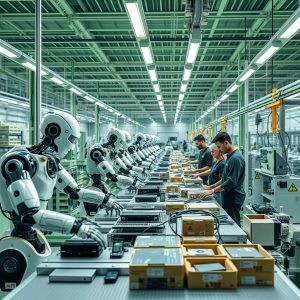
The AI-Driven Circular Economy: Revolutionizing Consumer Electronics through Strategic Sourcing and Green Manufacturing

In the rapidly evolving landscape of consumer electronics, the intersection of Artificial Intelligence (AI) and the Circular Economy is paving the way for innovative solutions that address both sustainability and efficiency. This synergy is not just a trend; it’s a transformative force that’s reshaping the industry, from component sourcing to end-of-life management. At the heart of this revolution lies AI-driven strategic sourcing and green manufacturing, two pillars that are redefining the way we approach consumer electronics.
AI-Driven Strategic Sourcing: The Backbone of Sustainable Consumer Electronics
Strategic sourcing is the lifeblood of any successful consumer electronics manufacturer. It involves identifying, acquiring, and managing the materials, components, and services needed to produce high-quality products. However, traditional sourcing methods often fall short in terms of sustainability and cost-efficiency. This is where AI comes into play.
Optimizing the Global Value Chain
AI-powered strategic sourcing tools can analyze vast amounts of data to identify the most sustainable and cost-effective sourcing options. They can evaluate factors such as material availability, transportation costs, and environmental impact, helping manufacturers make informed decisions. For instance, AI can help identify suppliers who use green manufacturing practices, reducing the overall carbon footprint of the product.
Enhancing Supplier Relationships
AI can also enhance supplier relationships by providing real-time data on supplier performance. This allows manufacturers to identify and address issues promptly, ensuring a steady supply of high-quality components. Moreover, AI can help manufacturers understand their suppliers’ capabilities and limitations, enabling them to negotiate better terms and conditions.
Green Manufacturing: The Future of Sustainable Consumer Electronics
Green manufacturing, or sustainable manufacturing, is another area where AI is making significant strides. It involves creating manufactured products that use a high degree of natural resources in processes that are non-polluting, thus preventing debris, and incorporating the concept of reducing, reusing, and recycling materials throughout all the phases of the product life cycle.
AI in Energy Efficiency
AI can optimize energy usage in manufacturing facilities, leading to significant cost savings and reduced environmental impact. For example, AI-powered systems can monitor energy consumption in real-time, identifying areas where energy is being wasted. They can then adjust production processes to minimize energy usage, leading to a more sustainable and cost-effective manufacturing operation.
AI in Waste Management
AI can also revolutionize waste management in manufacturing facilities. By analyzing data on material usage and waste generation, AI systems can identify opportunities for reducing waste. For instance, they can suggest ways to reuse or recycle materials, or identify materials that are causing excessive waste. This not only reduces the environmental impact of manufacturing but also lowers costs by reducing the need for new materials.
Integrating AI and the Circular Economy
The integration of AI and the Circular Economy is not just about improving sustainability and efficiency; it’s about creating a more resilient and adaptable industry. By leveraging AI-driven strategic sourcing and green manufacturing, consumer electronics manufacturers can reduce their environmental impact, lower costs, and improve their competitive position.
Moreover, this integration is not limited to the manufacturing phase. It extends to the entire product lifecycle, from design and production to end-of-life management. For instance, AI can help manufacturers design products that are easier to disassemble and recycle, or identify the most sustainable end-of-life options for their products. This holistic approach to sustainability is not just beneficial for the environment; it’s also a smart business strategy that can enhance a manufacturer’s reputation and customer loyalty.
In conclusion, the AI-driven circular economy is not just a vision for the future; it’s a reality that’s already transforming the consumer electronics industry. By leveraging AI-driven strategic sourcing and green manufacturing, manufacturers can create products that are not only innovative and high-quality but also sustainable and cost-effective. As we continue to navigate the complexities of the 21st century, this synergy between AI and the Circular Economy will undoubtedly play a pivotal role in shaping the future of consumer electronics.