Satellite Communication and AI: The Game-Changers in Optimizing Global Value Chains for Consumer Electronics

The consumer electronics industry thrives on efficiency, speed, and adaptability—qualities that are increasingly difficult to maintain in a world of complex global value chains. As supply networks stretch across continents, disruptions—whether from geopolitical tensions, natural disasters, or logistical bottlenecks—can cripple production and distribution. Enter the powerful duo of satellite communication and artificial intelligence integration, two technologies reshaping how companies manage their supply chains, optimize component sourcing, and ensure resilience in an unpredictable world.
The Role of Satellite Communication in Modern Supply Chains
Traditional communication infrastructures, reliant on terrestrial networks, often struggle to provide real-time visibility in remote or underserved regions. This is where satellite communication steps in, offering a robust, global solution that transcends geographical limitations. By leveraging low Earth orbit (LEO) satellites, companies can now track shipments, monitor inventory levels, and communicate with suppliers in real time, regardless of location. This level of connectivity is particularly critical for the consumer electronics sector, where delays in component sourcing—whether semiconductors, display panels, or rare earth metals—can halt entire production lines.
For instance, a smartphone manufacturer sourcing custom silicon chips from a foundry in Taiwan and display modules from South Korea can use satellite-enabled IoT devices to monitor the condition and location of these components throughout their journey. If a shipment encounters a delay, AI-driven predictive analytics can instantly reroute logistics, minimizing downtime and ensuring just-in-time delivery. This seamless integration of satellite communication with supply chain logistics is not just an upgrade—it’s a revolution in how global value chains operate.
AI-Driven Supply Chain Optimization: Beyond Predictive Analytics
While satellite communication provides the eyes and ears of the supply chain, artificial intelligence acts as the brain, processing vast amounts of data to make smarter, faster decisions. AI’s role in supply chain optimization extends far beyond predictive analytics; it encompasses demand forecasting, risk assessment, and even autonomous decision-making. Machine learning algorithms can analyze historical data, market trends, and external factors (such as weather patterns or political instability) to anticipate disruptions before they occur.
One of the most transformative applications of AI in this space is strategic sourcing. By evaluating supplier performance, lead times, and cost structures, AI can recommend the most efficient sourcing strategies, balancing cost with reliability. For example, if a key supplier in a high-risk region is flagged for potential disruptions, AI can suggest alternative suppliers or adjust inventory levels to mitigate the impact. This dynamic approach to sourcing ensures that companies are not just reactive but proactive in managing their supply chains.
Enhancing Consumer Electronics Logistics with AI and Satellite Synergy
The synergy between AI and satellite communication is perhaps most evident in consumer electronics logistics. The journey of a smartphone from factory to consumer involves multiple touchpoints—warehousing, transportation, customs clearance, and last-mile delivery—each presenting opportunities for delays or inefficiencies. Satellite communication provides real-time tracking and environmental monitoring (e.g., temperature, humidity) for sensitive components, while AI optimizes routing, load balancing, and delivery schedules.
Consider the refurbished smartphone market, a growing segment of the circular economy. Companies specializing in refurbished devices rely on efficient logistics to collect used phones, transport them to refurbishment centers, and redistribute them to consumers. Satellite communication ensures that these devices are tracked throughout their lifecycle, while AI streamlines the sorting, testing, and refurbishment processes. The result? A more sustainable and cost-effective supply chain that aligns with the principles of the circular economy.
Sustainable Packaging and Green Manufacturing: The Next Frontier
As the consumer electronics industry embraces AI and satellite communication for supply chain optimization, it must also address its environmental footprint. Sustainable packaging and green manufacturing are no longer optional—they are essential components of a modern, responsible supply chain. AI can play a pivotal role here by optimizing packaging designs to reduce material waste, selecting eco-friendly materials, and even predicting the environmental impact of different packaging options.
For example, AI-driven simulations can determine the most efficient way to package foldable display devices, minimizing the use of plastics and maximizing recyclability. Similarly, satellite communication can monitor the carbon footprint of logistics operations, enabling companies to make data-driven decisions that reduce emissions. When combined, these technologies create a supply chain that is not only efficient but also sustainable, aligning with the growing consumer demand for environmentally responsible products.
Device Automation and Smart Factory Automation: The Future of Production
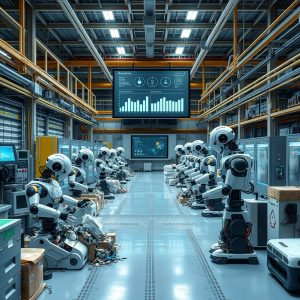
The integration of AI and satellite communication is also transforming the production side of consumer electronics. Smart factory automation, powered by AI, enables real-time monitoring and control of manufacturing processes, from assembly lines to quality control. Satellite communication ensures that these smart factories remain connected, even in remote locations, allowing for seamless coordination between global production sites.
For instance, a manufacturer producing generative AI hardware—such as specialized chips for AI applications—can use satellite-enabled IoT sensors to monitor equipment health, predict maintenance needs, and optimize energy consumption. This level of automation not only improves efficiency but also reduces waste, contributing to a more sustainable manufacturing process. The result is a factory that is not just smart but also resilient, capable of adapting to changing market demands and supply chain disruptions.
The consumer electronics industry stands at the precipice of a new era, one where the fusion of satellite communication and AI is redefining what’s possible in global value chains. From optimizing component sourcing to enhancing logistics and embracing sustainable practices, these technologies are enabling companies to build supply chains that are faster, smarter, and more resilient than ever before. As the industry continues to evolve, those who harness the power of this technological synergy will not only thrive in the face of disruption but also lead the way in shaping a more connected and sustainable future.