The Next Wave of Consumer Electronics: How AI and Hardware as a Service Are Accelerating the Circular Economy

The consumer electronics industry is undergoing a seismic shift, driven by the convergence of artificial intelligence (AI) and innovative business models like Hardware as a Service (HaaS). This transformation is not just about creating smarter devices but also about reimagining how these products are designed, manufactured, and consumed. At the heart of this evolution lies the circular economy—a framework that prioritizes sustainability, resource efficiency, and waste reduction. By integrating AI with HaaS, the industry is poised to unlock unprecedented opportunities for sustainability while meeting the growing demand for premium, high-performance electronics.
The Role of AI in Redefining Consumer Electronics
Artificial intelligence has become the backbone of modern consumer electronics, enabling smarter, more efficient, and personalized experiences. From predictive maintenance in smart factories to AI-driven supply chain optimization, the technology is reshaping every stage of the product lifecycle. One of the most significant contributions of AI is its ability to enhance device automation, allowing electronics to adapt to user behaviors, optimize energy consumption, and extend their lifespan. For instance, AI-powered algorithms can analyze usage patterns in smartphones or wearables, suggesting software updates or hardware upgrades that align with the user’s needs, thereby reducing the frequency of device replacements.
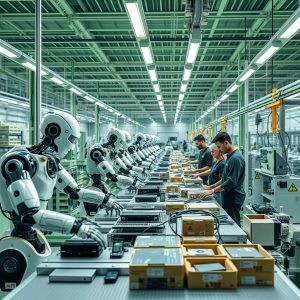
Beyond individual devices, AI is revolutionizing the way electronics are manufactured. Smart factory automation, powered by AI, enables real-time monitoring of production lines, minimizing defects, reducing waste, and improving energy efficiency. These advancements are critical for green manufacturing, where the goal is to produce high-quality electronics with minimal environmental impact. AI also plays a pivotal role in component sourcing, helping manufacturers identify sustainable materials and suppliers that adhere to circular economy principles. By leveraging AI, companies can make data-driven decisions that balance cost, performance, and sustainability.
Hardware as a Service: A Game-Changer for Sustainability
Hardware as a Service (HaaS) is emerging as a disruptive model in the consumer electronics sector, offering a sustainable alternative to traditional ownership. Under this model, consumers pay for the use of a device rather than owning it outright, with the manufacturer retaining ownership and responsibility for maintenance, upgrades, and eventual recycling. This shift not only reduces electronic waste but also incentivizes manufacturers to design products that are durable, repairable, and recyclable—key tenets of the circular economy.
HaaS is particularly impactful in the refurbished smartphone market, where devices are often discarded long before their functional lifespan ends. By adopting a HaaS model, companies can extend the life of smartphones through regular software updates, battery replacements, and hardware refurbishments. AI enhances this process by predicting when a device will require maintenance or upgrades, ensuring that refurbished products meet the same performance standards as new ones. This approach not only reduces the demand for raw materials but also lowers the carbon footprint associated with manufacturing new devices.
Driving Premiumization Through Sustainability
The HaaS model is also redefining the concept of premiumization in consumer electronics. Traditionally, premium products have been associated with high upfront costs and cutting-edge features. However, HaaS introduces a new dimension to premiumization: sustainability. Consumers are increasingly willing to pay a premium for products that align with their environmental values, and HaaS provides an opportunity for brands to offer high-end electronics with a sustainable twist. For example, a HaaS subscription could include access to the latest foldable display technology, custom silicon chips, or generative AI hardware, all while ensuring that the devices are refurbished, recycled, or repurposed at the end of their lifecycle.
This shift is not just a trend but a fundamental change in consumer behavior. As awareness of electronic waste and climate change grows, sustainability is becoming a key differentiator in the market. Brands that embrace HaaS and integrate circular economy principles into their business models are positioning themselves as leaders in the next era of consumer electronics.
The Future of Global Value Chains
The integration of AI and HaaS is also transforming global value chains, making them more resilient, transparent, and sustainable. AI-driven supply chain optimization enables companies to predict demand, manage inventory, and reduce lead times, ensuring that products are delivered efficiently and with minimal waste. This is particularly important in the consumer electronics industry, where rapid innovation and short product lifecycles can lead to overproduction and excess inventory.
Moreover, AI and satellite communication are enhancing the visibility of global value chains, allowing companies to track the movement of components and finished products in real time. This level of transparency is critical for ensuring ethical sourcing, reducing the risk of counterfeit components, and minimizing the environmental impact of logistics. For example, AI can analyze data from satellite communication systems to optimize shipping routes, reducing fuel consumption and carbon emissions. It can also identify opportunities for local sourcing, further reducing the carbon footprint of the supply chain.
Sustainable Packaging and Electronic Waste Management
Another area where AI and HaaS are making a significant impact is in sustainable packaging and electronic waste management. AI can optimize packaging designs to reduce material usage while maintaining product protection during transit. It can also identify opportunities for using recycled or biodegradable materials, aligning with circular economy principles. In the context of HaaS, packaging plays a crucial role in the reverse logistics process, where devices are returned to manufacturers for refurbishment or recycling. AI can streamline this process by automating the sorting and inspection of returned devices, ensuring that they are either refurbished or recycled efficiently.
Electronic waste management is a growing challenge, with millions of tons of e-waste generated globally each year. AI-powered smart factories can help address this issue by improving the efficiency of recycling processes, identifying valuable materials in discarded electronics, and reducing the amount of waste sent to landfills. By integrating AI with circular economy principles, the consumer electronics industry can turn e-waste into a valuable resource, creating a closed-loop system where materials are continuously reused and recycled.
As the consumer electronics industry continues to evolve, the synergy between AI and Hardware as a Service will play a pivotal role in shaping its future. These technologies are not just driving innovation in product design and manufacturing but are also redefining the relationship between consumers and their devices. By embracing the circular economy, companies can create a more sustainable, resilient, and customer-centric industry—one where electronics are not just smarter but also kinder to the planet. The journey toward this future is already underway, and the possibilities are as limitless as the technology itself.